Bel isi PNG – COVID-19 Response
Bel isi logo.jpg

We understand all organisations and the public are busy dealing with the unprecedented situation posed by COVID-19. 

In doing so please note that many experts are concerned that the social distancing, self-isolation and the stress caused by COVID 19 will increase the risk of domestic violence. This is a concern for all countries around the world.

We are working closely with our government partners to comply with national guidelines and will take necessary steps to ensure services are available to our subscribers.

Through Bel isi PNG we are currently operating both the safe house and case management centre. If the
virus spreads, we will temporarily operate the case management via a telephone service and close the safe house, although we will still support high risks clients.

Stay connected and spread kindness during COVID-19

Please consider if domestic violence is an increased risk for you or your loved ones and think
through a plan on how to minimise your risk and respond to any challenges you might face.

We're here to help and have provided more information below, including contact support details. 

Domestic violence

Learn the signs of abuse and reach out to get help. Signs of family or sexual violence:

  • Visible physical injuries like black eyes and other bruises.

  • Receive harassing messages from their partners

  • Seem afraid of, or are anxious to please their partners

  • Have limited or no access to finances or decision making

  • Show changes in personality, behaviour or physical appearance

  • Stop taking care of mental, emotional, physical and spiritual needs

    How can you keep yourself safe?
    It’s vital to protect yourself from harm if you feel that you’re being abused. If you’re unsure about your safety, it’s important to talk to someone. If you feel uncomfortable, you may have to move to somewhere safe.

    Believe in yourself
    If someone is continuously abusing you, remember that it’s never okay for someone to hurt you or threaten to hurt you. The best thing you can do in this situation is to remove yourself from the situation.

    Support pathways
    Recognising that there’s a problem is the first step in getting help. The second is to know that you’re not alone. If you need to get out fast, you have a number of options.

    Get support
    Making a decision to leave a situation where you feel unsafe may be hard and scary. Bel isi PNG is available to provide support.  If possible, you can also talk to someone you trust, such as a friend or counsellor. Cases involving of violence should be reported to the police.

    Where to go
    In high risk cases, you can call Bel isi PNG to access the Bel isi PNG safe house or another safe location.  You can also get in contact with a trusted family member or friend and ask if you can stay with them while you work out what to do next.

    Emergency Contact Numbers in Port Moresby:

    COVID-19 Toll Free Help Line 1800-200

    St John Ambulance 111

    Bel isi PNG Case Management: 7055-4407

    Counselling: 1-Tok Kaunselin Helpim, 8am-3pm, 7150-8000

    Police: 24hr Toll Free Hot Line 1800-100

    Transport: G4S Meri Seif Line 7222-1234

    You can also email us at: info@belisipng.org.pg

    And access our website at: www.belisipng.org.pg


    Keep safe and thank you for all your support. We will get through this together.


OS FOUNDATION
Recognising the Risk
Banner_homepage.png

Across the world, women are killed by current or former partners in staggering numbers. In Australia, one woman a week is murdered 1, with this year alone already nearing 70. Across the world, United Nations research suggests 58,000 women were killed in 2017 by intimate partners. Evidence shows that the highest risk period for a woman who experiences family and sexual violence includes just before leaving an abusive relationship and immediately after leaving.

“Only approximately one-half of the 456 women who were killed or almost killed by a
husband, boyfriend, or ex-husband or ex-boyfriend in a study of homicide of women accurately perceived their risk of being killed by their abusive partner. Women are unlikely to overestimate their risk; however, many will underestimate the severity of the situation.”

If a survivor is at high risk
immediately prior to and after separation, and may not accurately perceive the
severity of the risk, what can we do to assist a survivor when they decide to
leave an abusive relationship?


General Support     

  • Encourage and support a survivor to seek the assistance of the Bel isi PNG case management centre (ph: 7055 4401), develop a safety plan and consider the professional advice received;

  • Encourage a survivor to change their routine and known living, travel routes and work locations;

  • Respect the need for them to keep their location confidential;

  • Offer support to the survivor and respect their choices.

Workplace Support

As an employer or manager, a variety of measures could be considered in order to support a survivor:       

  • Enabling the survivor to access special paid leave provisions to relocate to a safe location and seek appropriate protection orders;

  • Facilitate remote work;

  • Enable a temporary change of work location;  

  • Allow part time or flexible work hours;       

  • Coordinate safe transport to and from work;

  • Ensure front gate and security staff are aware of the risk and do not allow access to perpetrators;

  • Change office email and phone numbers.

The safety of the Bel isi PNG safe house clients and staff are our number one priority and as such the location of the safe house is always kept confidential. Clients are requested to comply with the Bel isi PNG safe
house policies and guidelines to ensure their safety when they are most at risk.


The Bel isi PNG initiative is an innovative public private civil society partnership. It is supported by the Australian Government in partnership with the Government of Papua New Guinea as part of the Pacific Women Shaping Pacific Development Program, National Capital District Commission, Bank of South Pacific, Steamships Trading Co and Oil Search.


OS FOUNDATION
Private Sector Stepping Up to Support Employees
BSP fun day

BSP fun day

Bel isi PNG has 13 subscribing organisations who are providing supportive workplaces and services to employees and displaying visible leadership in order to influence attitudes towards Family and Sexual Violence (FSV).

Many CEOs and Human Resource leaders approach us and ask, what more can I do? In this article, we provide some examples of approaches other organisations are taking to communicate information about FSV. These approaches are seeing results with over 370 cases registered at the case management centre since opening last year.

We thought we would share with you some of their approaches which may give you some ideas for your own organisation.

BSP Leading the way

BSP is a founding partner and passionate advocate behind Bel isi PNG and providing support to their staff. Not only have they contributed the building which houses the Bel isi PNG safe house, they have also implemented a group wide FSV policy and established Voices of Hope. Voices of Hope is a support group within the business which allows survivors to reach out to each other to provide comfort and a safe space
to share their experiences through their healing journey.

“The interest and care shown through peer support has been overwhelming” says Alicia Sahib, Head of Support Services, who is the initiator of Voices of Hope as well as a key supporter behind Bel isi PNG.

“Without the leadership of BSP’s Group CEO, Robin Fleming, none of this would be possible. For sustainable change within an organisation on an issue that impacts our staff and their family’s well-being, support and
accountability of the Group FSV Policy from the highest level is critical” says Ms Sahib.

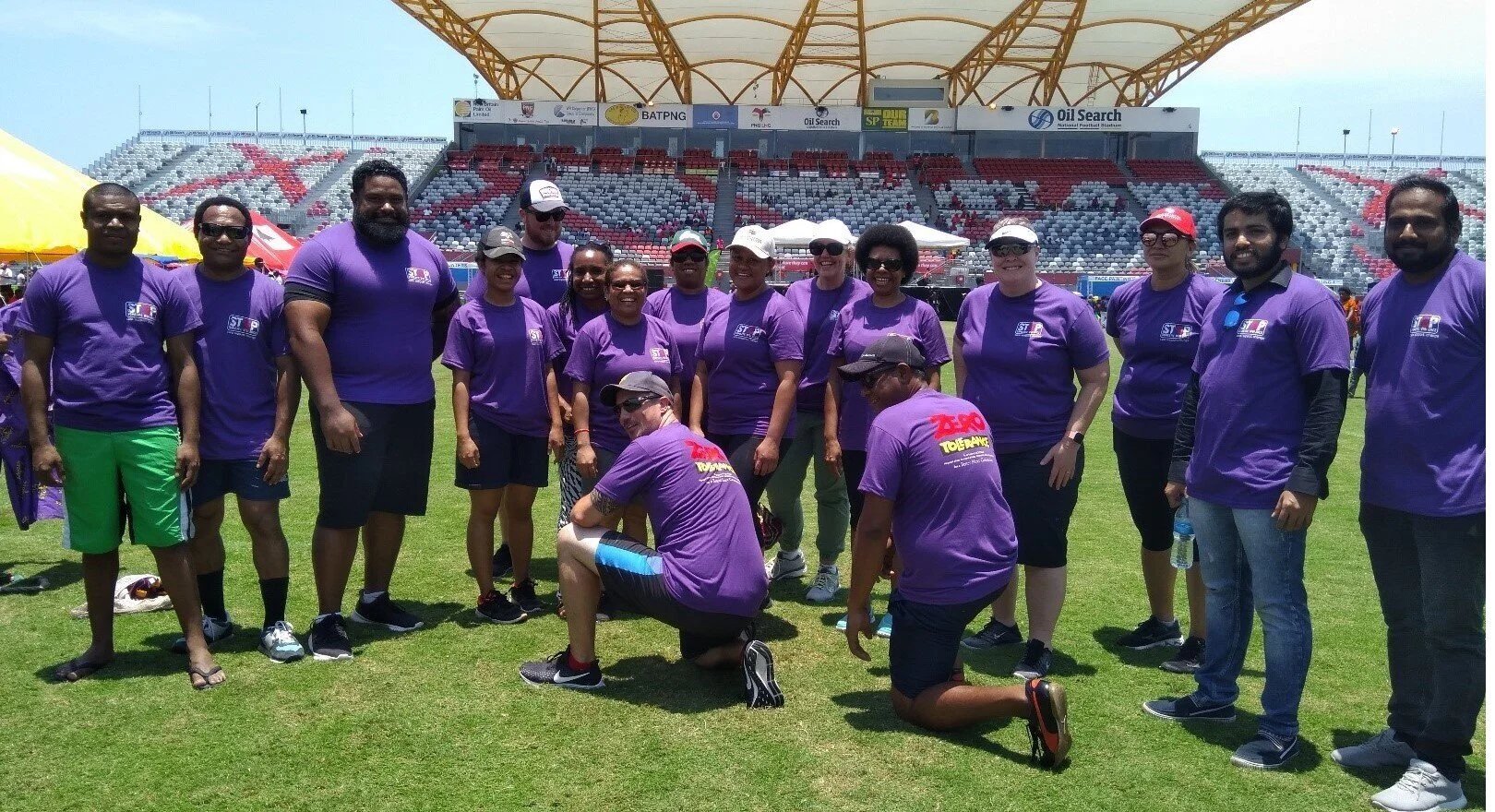
Recently, BSP hosted a Family Fun Day to promote happy families. This combined outdoor fun family activities together with information booths where families could seek information. Bel isi PNG was one of these booths and information on FSV and support services were available for staff and families.

Exxon Mobil Roadshow

Exxon Mobil conducted a service providers roadshow for its employees at its various sites from the 7th to 11th of October and was available for all staff and contractors to access. Bel isi PNG was one of many services providers who were invited to provide information. We shared information to all staff on FSV, the support services available to them and how they can access this.

Exxon Mobil staff were grateful for the expo as it gave them the opportunity to easily access different service providers such as Bel isi PNG, Nambawan Super, Internal Revenue Commission, banks and superannuation
funds to raise their queries. In a busy site-based environment, staff do not have much time to access different service providers and greatly appreciated their management’s leadership in organising the events.

Digicel

Digicel management wanted to ensure all staff had access to information about Family and Sexual Violence and the support services available for employees. They achieved this by making the Bel isi PNG one-hour awareness sessions were compulsory for all staff forming part of the mandatory annual training program. This means important information is made available to all staff including what is family sexual violence, the forms it can take, where to access help, what case management is as well as the essential medical services
that should be sought following sexual assault.

In order to ensure management was supportive, they also approached Bel isi PNG and asked for supervisor specific awareness sessions. This will ensure managers know how to talk to someone who is or has experienced family and sexual violence as well as what support they can confidently provide their staff.

These are just some examples of what companies are doing to visibly lead in changing attitudes to family and sexual violence through their workforce, as well as providing a supportive environment for survivors to
access services. If you would like to subscribe to services for your workforce, please contact us at info@belisipng.org.pg.

The Bel isi PNG initiative is an innovative public private civil society partnership. It is supported by the Australian Government in partnership with the Government of Papua New Guinea as part of the Pacific Women Shaping Pacific Development Program, National Capital District Commission, Bank of South Pacific, Steamships Trading Co and Oil Search.


Exxon Road Show

Exxon Road Show

OS FOUNDATION
Fundraiser makes a difference
Maintenance to safe haus

Maintenance to safe haus

Youth unemployment and violence against women are two pressing challenges in Papua New Guinea.

But there’s a way to tackle both at the same time – and it’s happening at a local safe house.

Founded and run by City Mission, Haus Ruth is Port Moresby’s oldest and biggest refuge for survivors of family and sexual violence. Women and their children go there for counselling, support and advice, and stay there in safety.

In recent times, they’ve been joined during the day by a group of young men, who are moving on from problems of their own. The homeless or orphans. They are graduates of another City Mission program that’s been designed to get troubled boys off the street and give skills and values with which to build a
new life.

And when they say “build”, City Mission means it quite literally. Drawing on funds raised by Bel isi PNG, and the expertise of construction from Curtain Bros, the young men have been working to refurbish the 60-year-old Haus Ruth and provide a better life for the women and children that stay there.

“It’s a big old timber building, structurally sound and in need of some repairs and maintenance,” says Amanda Anderson of Oil Search Foundation, who help Bel isi PNG raise and manage the funds.

“City Mission approached Curtain Brothers to see what they could do, and they were kind enough to to come on board provide all the skilled labour at their own cost while City Mission provided the young men to learn skills on the job and help complete the project. It’s a great example of working in partnership.’”.

“We’ve had some really good guys come in to help,” says Grant Isakson, the Curtain Bros building manager overseeing the works, and helping the boys pick up new skills.

“We’ll probably offer them a job when we’re finished.”

“So far, we’ve sanded and painted the outside, added new eaves, gutters and pipes, and replaced the flywire and security screens. Now we’re repainting every room, retiling the bathroom, fixing the electricity, replacing rotten floor boards, and adding a few kitchen cabinets.”

“It will take a while, because there are still people living here, and we need to observe security protocols and not disrupt their day-to-day activities any more than we have to. One way or another, we want to keep the
place open, because women have got nowhere else to go. There’s not a lot of facilities around Moresby for women with no family to take care of them.”

“The whole project is still only about 30% complete, but things are already looking fantastic”, says Anderson. “Safe houses like these are vital to the community and I think it’s great to see the community and business support for them”.

For his part, Isakson paid tribute to the many big and small business in the city who contributed building materials free of charge.

Things are tough up here now, there’s not a lot of work around, but even so they’ve been donating a lot of gear. Covering everything from paint, tiles and pipes to free fire alarms, free building
accessories have come from Dulux, Taubmans, Bishop Brothers, Atlas Steel, Badili Hardware, Paradise Interiors, ODG PNG, Aspen Medical, M&E Partnership and the PlanPac Group.

“Haus Ruth is like any building,” says an equally grateful John Reesink, the General Manager of City Mission. “You leave it for too many years, and sooner or later, they just become shabby to a point where no-one wants to live there.”

This is the second safe house supported by the Bel isi PNG fundraiser.

Another local safe house was also made safer and more comfortable following a major refurbishment including painting, tiling, plumbing, improved security, a new septic system, furnishing and linens.

The safe house manager advised, “we are pleased to be able to continue to offer essential services to survivors in our newly refurbished facilities thank all partners for their generous support. Funding in the sector is very limited and we would not have been able to make these improvements without
support”.

BSA Construction, that was awarded the contract for the refurbishment also contributed by providing significant building services from their own supplies and at their own cost, over and above original scope of works.

BSA Construction Manager said that he and his team came to feel “honoured to be a part of such a great cause”.

“Domestic violence is something that is very common is this country and to have the opportunity to build something safe where woman and children can seek refuge was a privilege. This really hit home with a lot of the guys working with our team. That’s why we really tried to provide extras in every way we could, and we will continue to provide free maintenance to the house in every single way possible.”

“To see the team’s faces at the end of the job, when we were thanked by residents and pastors from around the church and school, was really a proud moment for me.”

If you want to get involved and assist the sector, or know someone who is interested, reach out to Bel isi PNG at info@belisipng.org.pg.


The Bel isi PNG initiative is an innovative public private civil society partnership. It is supported by the Australian Government in partnership with the Government of Papua New Guinea as part of the Pacific Women Shaping Pacific Development Program, National Capital District Commission, Bank of South Pacific, Steamships Trading Co and Oil Search.


OS FOUNDATION
Thousands march against violence
Bel isi 2019 B.png

Residents of Port Moresby have taken to the streets to call for an end to violence against women and girls.

Now in its second year, Bel isi PNG’s Walk for the Elimination of Violence Against Women and Girls (EVAW) saw thousands gather at Konedobu Oval at dawn, and from there marched to Harbourside Precinct.

In the lead-up to Mondays International EVAW Day, the march was led by Governor Powes Parkop and the Minister for Police, Bryan Kramer. Both called for the community to work together to ensure every single woman and girl lives a life free from violence.

In his speech, Governor Parkop said that it is his vision to make NCD safe for women and girls. He also emphasised that it is everyone’s responsibility to ensure this happens.

“I want to see our city safe for everyone. Women and girls should be able to walk freely and live a life free from violence.”

Another key advocate against gender-based violence, Minister Kramer asked the crowd to think about the importance of our family homes being a place of comfort rather than a crime scene. “In that crime scene, small kids grow up, they grow up witnessing a crime being committed and as Papua New Guineans we should reflect on this. There is a lot we can do; the opportunity lies with us.”

Marcus Bai, not only a role model to his family but also to his many rugby league fans, he stood before the crowd and said “It’s never too late to say no to violence I am here today because I believe a family free from violence is the best outcome for men, women and our children. I am not here because I’m a sportsman. I’m here because I am a husband, parent, brother, cousin and uncle.”

Together with Oil Search Limited Managing Director, Peter Botten, Oil Search staff, Celestine Ove gave a moving speech of her own personal experiences which resonated with many women.

“I know the fear, loss of confidence and pain women and children experience from family violence,” she said. “I know how violence can prevent someone from reaching their full potential.”

“Silence allows violence to continue. You can take action by speaking about this issue with friends, family and your community. If we all come together, we will drive change for women and girls in our country.’

Many of the marchers were members of the organisations that make up Bel isi PNG – a public/private civil society partnership designed to address family and sexual violence.

“This time last year, Bel isi PNG had seven subscribers, now there are 13 and counting.” says Stephanie Copus-Campbell, Executive Director of Oil Search Foundation. The case management and safe house services are supporting more clients every month, and I’m pretty sure this walk will attract even more.

“Many people are saying ‘enough is enough’. And it’s not just women; it’s a lot of men too, and it’s wonderful to see so many children participate.”

Appropriately for a country where a vast majority of women will experience violence at some point in their lifetime, Friday’s EVAW march has kicked off a month of activities including the Governor’s Sunday Walk, a youth event on the streets of Port Moresby on Monday, and Redvember where NCDC is urging everyone to wear red to work on Fridays during November to say “Stop” to violence.

While the PNG Development Strategic Plan 2010 – 2030 expresses “zero tolerance (for) violence against women and children,” such violence “remains serious and pervasive” according to a 2017 Government report.

“Changing attitudes to family and sexual violence, as well as providing services to survivors is core behind the Bel isi PNG’s program,” adds Head of Gender and Leadership, Amanda Anderson. “The hope is that subscribers take the message back home to their families and communities and awareness raising is the first place to start. Many people don’t know that violence against women and girls is against the law or that there are services that can help those in need.

“So, taking that message and converting into action is not always something that’s going to happen overnight. But every journey begins with a single step.”

“Or, in this case, a march!”


OS FOUNDATION
A Marathon effort
PNG meets Dublin

PNG meets Dublin

PNG hit the world stage on Sunday 27 October with great enthusiasm and determination.

Wearing t-shirts saying, “Leave No one Behind,” on top of running shoes and track pants, four local development workers took part in the famous Dublin Marathon – and all 42km went according to plan.

“It was pretty exhilarating,” says Oil Search Foundation’s Stephanie Copus Campbell, who ran in lockstep with PNG’s own, Jacqui Joseph of Equal Playing Field the World Bank’s Patricia Veever-Carter, Oxfam PNG’s Charlotte Kakebeeke.

“None of us are exactly professional athletes, but we did our best to be great ambassadors for PNG, and the wonderful people who call this country home. And I can certainly report that there’s a lot of interest out there.

People were utterly fascinated by the fact that we have over 800 different languages not to mention literally thousands of unique plants and animals. It’s a beautiful place, quite unlike any other, and I believe that we
got that message across.”

Amongst 22,500 runners, and a crowd of at least twice amassed on the footpaths, the women weren’t just running to raise awareness of PNG, but in pursuit of funds.  

Thanks to sponsors like Oil Search and Curtin Brothers, and plenty of individual donations, services for PNG child survivors of violence now have an extra 250,000 kina to spend.

“I’ve chosen to run this marathon as part of a greater journey to address the level of violence that affects women and children in PNG,” said Joseph, who had never run anything close to 42km, but finished the race with a radiant smile.

First staged in 1980, Dublin is Europe’s fifth-largest marathon – and a magnet for runners of every stripe. While plenty of elite athletes compete, they are joined by thousands of ordinary people who just want to get to the finish line, even if it takes five or six hours.  

For Joseph, it’s an attitude that successful development workers need to adopt as well.

“So much of what we do is about persistence,” she says. “It’s about gritting your teeth and allowing your heart to carry you when your legs won’t anymore.”

“Working in the family violence space isn’t glamorous, and genuine change can take decades or more. It’s hard to get an instant ‘win’ – and, if you do, there won’t be medals and applause.”

“But I can’t think of anything I’d rather be doing. Or a country that I could be prouder to represent.”


OS FOUNDATION
Partnership in Action: Police Training
Police training supported by Bel isi PNG.

Police training supported by Bel isi PNG.

Working with partners to address family and sexual violence is critical to helping survivors of family and sexual violence get the help they need. Bel isi PNG is proud to have been able to support the training of 127 police officers throughout the different divisions in the Royal PNG Constabulary to ensure police officers are fully equipped with the tools and knowledge to carry out their duties in enforcing the law. The NCD Metropolitan Superintendent, Perou N’Dranou was delighted when his request for Bel isi PNG to support the workshops was accepted.

Regional training officer Senior Inspector Paul Kipak said the training was to improve the performance of officers in the city’s police stations as the daily management of personnel was an issue. He said more training needed to be done to avoid criticism and complaints from the public and even from the courts.

Superintendent, Perou N’Dranou, wanted the training to equip his supervisors and officers with the necessary skills and knowledge to perform their duties more effectively.

The training supported included:

  1. Court Files preparation (refresher)

  2. Supervisors Roles (Refresher)

  3. Use of Force Workshop

  4. Police Station Commanders Workshop

One key finding was the challenge of police Family and Sexual Violence Units only operating during business hours.  This means that many officers who see cases at night and on the weekends are not properly trained to deal with the issues and lack knowledge of the referral pathways. The good news is as a result of Bel isi PNG’s support, more officers have this training and can refer clients to Bel isi PNG and other services for help.  

All 127 police officers received a certificate following their attendance at the workshop.

The Metropolitan Superintendent and his officers were very grateful for the support and look forward to strengthening the partnership with Bel isi PNG.

The Bel isi initiative is an innovative public private partnership between Papua New Guinean and international businesses, the National Capital District Commission and is supported by the Australian Government in partnership with the Government of Papua New Guinea, Oil Search, Bank of South Pacific and Steamships Trading Co.

OS FOUNDATION
NCDC Governor Opens the 2019 Bel isi PNG Leadership Forum
Leaders gathered for the 2019 Bel isi PNG Leadership Forum.

Leaders gathered for the 2019 Bel isi PNG Leadership Forum.

Two genuine Aussie heroes have thrown their weight behind Bel Isi PNG, Port Moresby’s ground-breaking public-private partnership, to tackle family and sexual violence (FSV).

Named the 2019 Australians of the Year following their role in rescuing 12 Thai boys and their soccer coach from a flooded cave in 2018, Dr Richard Harris and Dr Craig Challen took part in Bel Isi PNG’s second annual Leadership Forum held recently at the iconic APEC Haus.

In town thanks to Oil Search – an enthusiastic supporter of Bel is PNG– they were joined by many prominent figures from government, business, and civil society.

All guests heard National Capital District (NCD) Governor Powes Parkop congratulate partners on a hugely successful first year which saw the establishment of a safe house funded by BSP and a case management centre supported by Steamships. Oil Search Foundation provides all project management, and the Australian Government (in partnership with the Government of Papua New Guinea through its Pacific Women Shaping Pacific Development Program) provides core funding support. The local NGO, Femili PNG operates core services.

Bel isi PNG has already assisted over 200 FSV survivors, including children, to access services and has provided around 2000 people with information on where to find help through employee awareness sessions. The Governor said that while progress is very promising, challenges are daunting:

“Yes we have reduced FSV but ultimately we need to stop it,” he said. “We need to think about how we can change mindsets and behaviour, and in doing so, we need to think outside the box.”

The Governor’s words set the tone for the forum that followed – an interactive set of round-table discussions where participants shared ideas on how to protect and empower women. They put forward action plans on engaging men in preventing and addressing violence, leading change, overcoming the many constraints faced at work including every day sexism, developing corporate policies and advocating for change.

Oil Search Foundation’s Executive Director, Stephanie Copus-Campbell, described the discussions as extremely productive.

“It’s events like these that galvanize the private sector in partnership with government and civil society to drive change. As leaders and influencers within the community, we have a responsibility to raise awareness of the challenges and come up with practical solutions to address the problems.”

‘With the majority of women in Papua New Guinea having suffered from some form of physical or sexual violence, changing mindsets is a major priority – and we’re not going to do that without working in partnership,” Copus-Campbell said.

Partners established the leadership forum to bring together leading voices and perspectives on the many facets of FSV. These voices included Police Minister Bryan Kramer, who emphasised the need for effective, sensitive and well-trained police; ANZ Chair Winifred Kamit, who promoted the need for effective leadership as well as developing the capacity of local NGOs to respond; Minister-Counsellor & Consul-General for Australia, Jo Stevens, who expressed the need to prioritise working with local service providers which have family and sexual violence policies and procedures in place; and CEO of the Brian Bell Group, Cameron Mackellar, along with Bank of South Pacific’s Head of Support Services, Alicia Sahib, who both demonstrated how active leadership results in more employees seeking support and in return able to perform better at work.

Participants also heard from male champions of change including NCD Deputy Governor and Motu Koita Assembly Chairman Dadi Toka Jr, Digicel CEO Colin Stone and Ganjiki Wayne representing the Oil Search Board on the positive role men can play in combatting FSV. The group agreed there are many PNG men who are actively driving positive change and inspiring other men and boys on why respect for women is good for everyone.

The two Australians of the Year, also male champions for change, congratulated the countless every day heroes who devote their lives to a safer PNG. Both highlighted the essential role of leadership and partnership in addressing the challenges and maximising the opportunities for change.

A successful outcome of the forum saw new subscribers to Bel isi PNG and the City Pharmacy Limited sharing the captivating poem and message that was presented at the leader’s forum by a passionate young Papua New Guinean Women, Yvette Renagi. The poem raised awareness on the destruction of family relationships as a result of abusive behaviour and poor communication, it was shared nationwide through the two daily newspapers.

OS FOUNDATION
Lina's Story
Lina is now safe, and starting over with her children

Lina is now safe, and starting over with her children

*Names have been changed to protect the identity and safety of the clients.

This is Lina’s story. She is a mother and wife who endured severe abuse from her husband, who is also the father of their children. She is a survivor. 

Since her marriage, Lina has experienced severe violence from her husband for over nine years. She constantly lived in fear with her children. Lina said that in order to avoid being beaten, she obeyed her husband and tried to do whatever he asked. She thought it was the only way. 

Before Lina got married, her husband had lied to her that he was getting a divorce and he was single. When Lina found out that he was lying, it was too late as she was already pregnant with her first child. After Lina had the child, her husband gave the baby to his first wife and restricted Lina from seeing her baby. She was constantly beaten, and restricted from socialising with others, including her family. Lina had escaped several times, but her husband always managed to find her. And when he did, he would beat her up again and bring her back to their home. Lina also tried to get help, but her husband was very influential, that all her efforts were in vain, leaving her feeling helpless. 

When Lina was pregnant with her second child, she was still continuously beaten. Her husband’s first wife had left him, so Lina’ was reunited with her first born child. She continued to fall pregnant and even after their fourth child, the beatings didn’t stop, the abuse just got worse. She was also continuously threatened. Lina shared that her husband had pushed a 9mm pistol into her mouth and said, ‘’I will kill you and say that you killed yourself.’’ 

The abuse Lina endured included physical assault, marital rape, stalking, threatening, emotional, psychological, and also financial abuse. Because Lina had tried to escape before, her husband didn’t give her extra money, but just enough to buy food for the family. Meanwhile, the perpetrator went around with other women.  

Lina recalls how her husband would force her to find another woman so that he could have sex with them both. Lina couldn’t bring herself to do that. So he forced  her and a young woman, who was his relative, to have sex with him. He would forcefully have sex with his relative, and force Lina to watch. And when they refused, he would beat them up. Lina was also made to remove her clothes and stand naked in front of her children, while he would tell them, ‘’Your mother is a slut, a pamuk.’’ 

Lina had ended up in the hospital so many times with bruises, and would get treatment, but never issued a medical report because of her husband’s influence. She was not only scared for her safety, but also the safety of her children who had witnessed the ongoing violence perpetrated by their father. She made up her mind that she had enough, and that her life, and the life of her children were more important. She knew that she would not get help in the province they were living in, because of her husband’s influence. She had to leave with her children. 

But leaving her husband wasn’t going to be easy. The only way was for Lina to make him believe that she would be an obedient wife, and would never leave him. While doing that, she was also giving some money to her aunty to save for tickets to travel. 

With enough money saved, Lina waited for an opportune time. At that time, her husband had trusted her enough to send her to do his flight bookings for his trip out of the province. That was her chance, the opportunity she had been waiting for. 

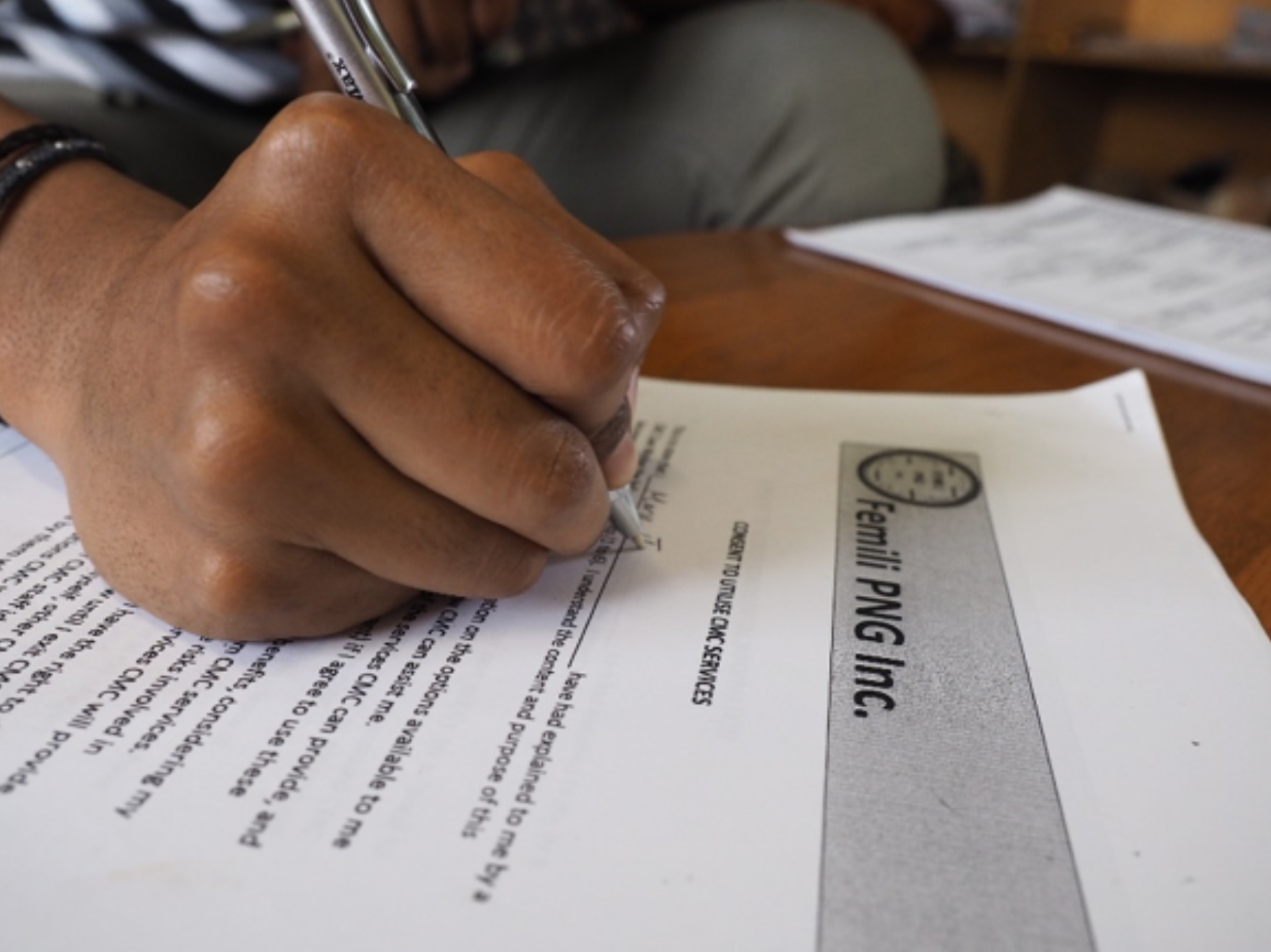
The next day after her husband left, Lina picked up her children from their school, packed a few clothes into a plastic bag, and took the next flight to Port Moresby. She had learnt that Femili PNG was operating the Bel isi PNG Case Management Centre and safe house. She had called a Femili PNG staff in Lae when boarding the plane. When Lina and her children landed at Jackson’s airport, she had no place to go so she called another Femili PNG staff in Port Moresby, and was advised to go straight to the Bel isi PNG Case Management Centre (operated by Femili PNG) with her children. From there, she and her children were assisted with safe accommodation. 

Lina was assisted to access other existing services such as the police, medical care, court and Welfare. The Court ruled in her favour, granting her a Permanent Protection Order after she had obtained an Interim Protection Order (IPO).

Also with the support from her family, Lina is now safe, and starting over with her children. She said, ‘’My biggest concern is my children. The ongoing problems affected their education. But now, as long as they are safe and happy, I am happy.’’ 

OS FOUNDATION
Save the Date
Banner_homepage.png

The Bel isi PNG Walk to end Family and Sexual Violence will be commemorated during the 20 Days of Activism on the International Day to End Violence Against Women and Girls, celebrated annually on the 25thof November globally.

Bel isi PNG will be organising the 2nd EVAW Walk this year on the 23rd of November.

Save the date and come along to support a worthy cause.

OS FOUNDATION
Can we just talk?
Banner_4.png

Dear Husband, 

In the morning when you wake and the alcohol wears off, what do you see when you see my face? Do you see the mirror of black and blue, do you feel that too? When you see my lips swollen like I’d walked into your beehive of a fist and skin lashed and cut and oozing of blood, does your heart sink, even a little tiny part? What do you see when you look into our daughter’s eyes? Do you see fear? Resentment? Disappointment? Remorse? Hopelessness? Because she reeks of that when your eyes change colour, when you come home late, when the plates break. What do you see when you look at our sons? What do you want to make out of them? What kind of an example are we showing them? What kind of a platform are we giving them to build a life and to love and show affection? These are our humans, we made them out of love and as they stand before us, wide eyed and innocent, all we throw at them is selfishness, and mistrust and hate; all we show them is instability and unhealthy ways to solve problems. Why can’t we just talk and why can’t we just listen? Why can’t we lay down these arms and pause for second?  

Dear wife,

When the noise becomes silence, do you replay the things you have called me? Do you think about the way I feel when you take my ego and wipe on it your feet; when you lay out every single mistake you claim to forgive me for, all out there, a criteria they use to judge me? What do you see when you look into our daughter’s eyes? Do you see the way she looks at me? The one man who is her strongest supporter and protector, now zeroed down to nothing and she sees an empty shell. She sees me thru your eyes as incapable of being the one man she can count on, and my heart breaks. What do you see when you look into our sons’ eyes? They look at me with disappointment with the thought that I must be a horrible person to make their mama say these things. Why can’t we talk? Why can’t we be civil about this? I have no words, my darling, but I have to be silent about this. 

Dear mama,

As I cuddle my little sister and hush her fears, pretending to be strong, I only hope tonight he does not leave you with a flat-line. I squeeze my eyes shut and with sweaty palms together, I plead to a God I have only started learning about. I think I feel Him. I think He keeps you. I wish He’d keep away those hands, though; I wish He’d give me courage to stop this. 

Mama, I hear you cry. 

Mama, I see the changes. 

Mama I see you flinch. 

Mama I cry. 

I need you to know I am not breaking so you can take my strength and make it yours if yours seems to have gone away. 

Mama I am here. 

Dear Daddy, 

I have heard the things she says to you. I see your eyes turn red and I hear you over and over try to make your point without lifting a finger. And I have seen what it does. If it doesn’t make you violent, it makes you distant. It makes us distant. I see you work and I see you tirelessly love and I hope you know that I appreciate you. I hope you wake up today and you see the light. 

Daddy, don’t jump. 

Daddy put down the knife. 

Daddy, put away those funny looking pills and look at me- look! 

Daddy, don’t do this, I am here. 

I got you! 

Daddy… it does not have to be this way. 

And I toss and turn in the night trying to understand why in the place where love should thrive and laughter should make every blood cell bounce, I see it ooze out of cuts and clot in bruises. I try to understand why a man who claims to love me would still find some comfort in the clenching of his fist washing upon me like wave after wave with the only salt, in my sweat. I try to understand how I could claim to love him and still find a string of validation in the hurling of disrespect and ungrateful syllables instead of poetry and affection. I try to understand the every day of these innocent babies we are raising in households crawling with resentment, hate, pessimism, abuse, fear, darkness, anxiety, depression, rebellion and every other thing synonymous ‘what the hell is going on?!’

We are raising a whole generation in homes packed with a lot of noise that equals to silence. We are raising a whole generation in households strangling them with imagery and ideas of happiness equated to pain and abuse as if abuse must be present for one to be loved; as if fear is the foundation of love- where did we learn this? Where did we go wrong? I ask and I pause. And I realise that this is all choice. 

Choice. 

We choose to raise our voices and use them as weapons to beat down the ones we claim to love and then we raise our hands to enforce the power our voices and then we raise a knife, a gun, an actual weapon of some kind; hell we raise a fire when we feel like we should and we burn each other at the stake; at the hearing of a whisper in wind. 

One more mother silenced. 
Gravely harmed and graves marked.

One more father lost. 
We found his lifeless body hanging in the loft. 

One more sister lost at the hands of the love her life; she lost her life.

One more brother stabbed 
Fuelled by accusations and falsities. 

One more human life lost because we choose our egos over our love 
And we make excuses in violence when we could sit down and listen; one speaking, one quiet.

But there is hope. 
Hope in this generation fuelled by 
Love and kindness; 
Compassion and selflessness; 
Courage and confidence.  

So we watch 
And learn 
And grow
And hope to God that the next we hear letters in the voices close to us, 

They are of gratitude and happiness-  
Can’t we lay down these arms and pause for a second?


OS FOUNDATION
Linda’s Story
HANDS-2.png

When Linda met James, she was happy and looking forward to a future with the man she loved. However, she began to have doubts when James’ behaviour towards her started to change. Starting with swearing, punching and degrading comments his treatment of her became progressively worse. 

For six long years she endured the pain and suffering with no reliable options for help. She had reported the matter to the police several times but with no results and she gave up going to them. She began turning up to work with black eyes, a result of being punched violently in the face and bruised skin. ‘ Linda’s boss was worried about her and encouraged her to seek help. But after her experience with the police she had no confidence to go back to them.

It was at a Bel isi awareness session conducted at her office that Linda found out more about a service that could provide assistance for her, as a survivor of family and sexual violence. Linda’s company had subscribed to Bel isi PNG after observing and being very concerned about high rates of violence and absenteeism among staff who they knew off who were going through difficult times. With the support of her senior management team, they were able to register Linda’s case at the Bel isi PNG Case Management Centre, operated by Femili PNG, to get a restraining and protection order. 

Linda’s husband was called to stand in front of the court and warned if he continued to abuse her he would face charges that could see him in prison.  

“Mi lukim planti man na meri experiensim dispela hevi na mi hamamas long helpim Bel isi givim mi. Nau mi save helpim givim toktok na long ol narapela long helpim ol tu.” I see a lot of women and men going through this problem and I am grateful for the support Bel isi PNG has provided me. Now I talk to others and hope sharing my experience helps them. 

Linda is still living with her husband and since her protection order he has stopped abusing her and is more respectful.

NB: Names have been changed.

The Bel isi initiative is an innovative public private partnership between Papua New Guinean and international businesses, the National Capital District Commission and is supported by the Australian Government in partnership with the Government of Papua New Guinea, Oil Search, Bank of South Pacific and Steamships Trading Co.

OS FOUNDATION
Port Moresby safe house now ever safer
Bel isi walk against gender based violence last year which raise K400 000

Bel isi walk against gender based violence last year which raise K400 000

More and more Papua New Guineans are saying “no” to violence against women – and they are speaking with their actions as well as their words.

Just days after hundreds of people rallied at Parliament House to support more action to address family and sexual violence, Port Moresby can expect a huge win with the comprehensive upgrade of a local Port Moresby safe house.

The upgrade is also a win for partnership. Last year the public private initiative Bel isi PNG (peaceful PNG) alongside Oil Search Foundation raised over PGK 400,000 to support urgent infrastructure repairs for local safe houses.

Safe house services are an important part of helping survivors of family and sexual violence by providing them with refuge from a violent situation. But safe houses struggle with funding which makes it difficult to provide the level of service that survivors require and deserve.

Many individuals and companies contributed to raising funds including Newcrest, Oil Search staff, Pacific Helicopters, Atlas Steel and many others. This is in addition to the many private sector companies including BSP, Oil Search, Brian Bell and Steamships that support Bel isi PNG and the generous support from the Australian Government in partnership with the Government of Papua New Guinea.

The safe house manager advised, “we are pleased to be able to continue to offer essential services to survivors in our newly refurbished facilities and thank all partners for their generous support. Funding in the sector is very limited and we would not have been able to make these improvements without support”.

BSA Construction, that was awarded the contract for the refurbishment also contributed by providing significant building services from their own supplies and at their own cost, over and above original scope of works.

BSA Construction Manager said that he and his team came to feel “honoured to be a part of such a great cause”.

“Domestic violence is something that is very common is this country and to have the opportunity to build something safe where woman and children can seek refuge was a privilege. This really hit home with a lot of the guys working with our team. That’s why we really tried to provide extras in every way we could, and we will continue to provide free maintenance to the house in every single way possible.”

“To see the team’s faces at the end of the job, when we were thanked by residents and pastors from around the church and school, was really a proud moment for me.”

Daisy, the CEO of Femili PNG that delivers the Bel isi PNG safe house and case management services said, "Working on the issue of family and sexual violence or FSV is complicated and you’ll always find that we are limited, but if we will work in collaboration and everyone is willing to take part, altogether can make a greater impact”.

Peiru
Mia is finally home
An emotional moment for Mia and her family

An emotional moment for Mia and her family

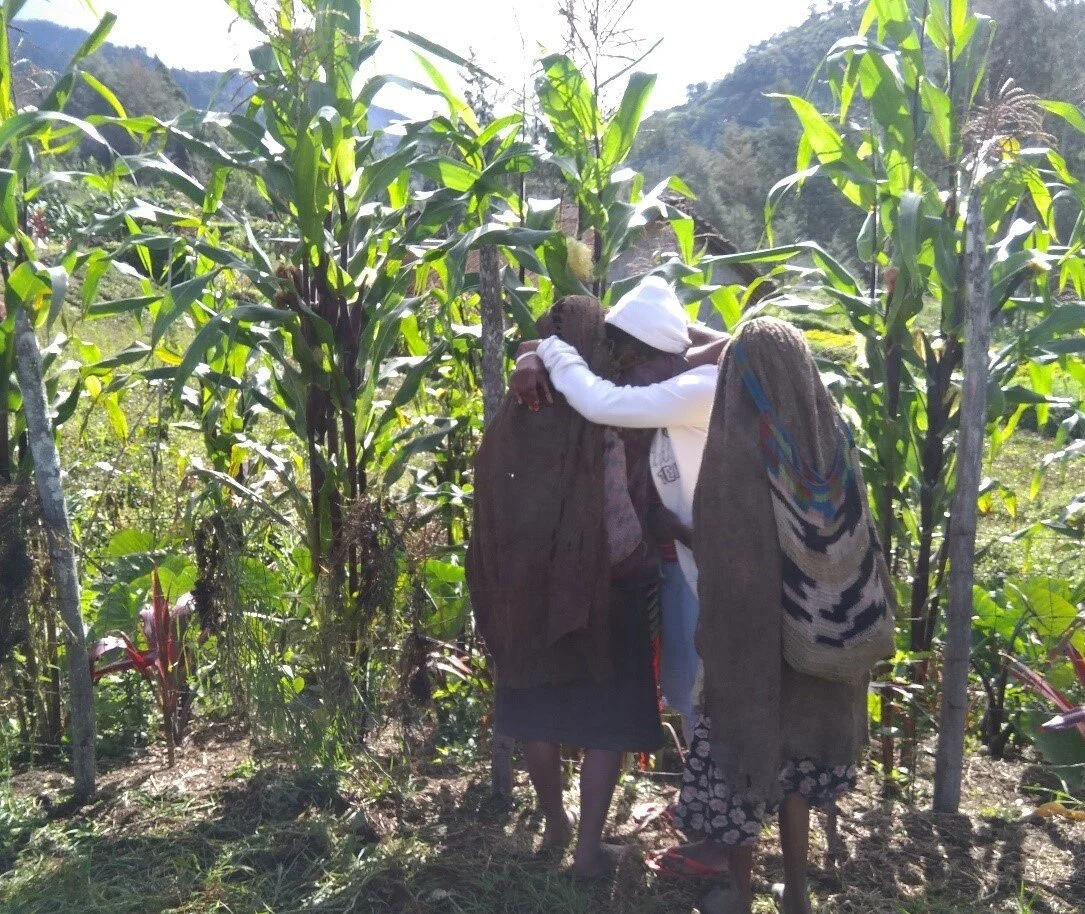
It was a very emotional moment when *Mia was reunited with her family after 3 years. Her family thought she was dead, and they had worn black clothes to show their sorrow and mourned for her.

This is the story of Mia, a child survivor of sexual abuse, who is now safe and reunited with her family.

Mia’s parents had separated when she was little. Mia’s father had moved to the city where he found a job. He then brought Mia to stay with him, promising his teenage daughter a better life and good education. However, those promises were not fulfilled. Instead, Mia was raped on several occasions by her
biological father and abused physically by him and his new wife. The sexual abuse by the father was brought to light and reported to the community leaders, and the case was mediated at that level, but the abuse continued.

After a few years of experiencing ongoing abuse, Mia felt the longing to be reunited with her mother and her family. That’s when she escaped to get help from the nearest police station. She was taken to a safe house for
accommodation until she was referred to Bel isi PNG Case Management Centre (operated by Femili PNG) to manage her case. A Case Worker was assigned to work closely with Mia in close collaboration with the Child Protection Officer from Welfare to help her with her case and access other assistance.  However, she had to spend more than a year at different safe houses due to the complexity of her case.

For Mia, being away from family whom she grew up with was hard. And though she wished to get justice for the abuse she went through, she also dreamt of being with her family for love and support. Family tracing and risk assessments were done but it was very challenging because the place where the child and her family come from was a very remote area with no road access. There was a need for her Case Worker to travel to the respective province to do an actual family tracing and coordination with respective service providers for
more accurate family location. It took two months for the Case Worker to identify Mia’s family location and contact, and finally she was reintegrated back to her family. The effort was supported by the Provincial Community Development Advisor, Ms. Siviri Lalave.

It was a very emotional moment as Mia arrived home to her family, who all thought she was dead. Mia and the team who accompanied her were not only received by the family, but by the whole community. Mia’s family expressed that they will look after her and support her to do her studies. It was agreed that Femili PNG and Mia’s family will continue to follow up with the case to ensure that justice is served.

Ms. Lalave acknowledged the efforts that Femili PNG through the Bel isi PNG Case Management Centre and Safe House put into helping the client. She said, ‘’We appreciate what Femili PNG is doing to help the Government bridge the gaps that we have and assist us where we see that we can’t do much because
of situations such as financial crisis and limited resources.’’ Ms. Lalave acknowledged the long journey travelled just to reunite one client with her family. Ms Lalave added, ‘’one life is important, one life is special, one life is valuable.’’

Mia is looking forward to continuing her studies and becoming a Social Worker so she can help others.


OS FOUNDATION
Oil Search Managing Director Peter Botten supports the need for leadership to address family and sexual violence FSV in the workplace
Peter Botten Speech v2.jpg

The Business Coalition for Women (BCFW) hosted a forum at APEC Haus to launch their new Executive Women in Leadership program. The forum provided an opportunity for Peter Botten to speak about Oil Search’s support for Bel isi PNG and the organisation wide commitment to addressing family and sexual violence (FSV) through the workforce.

The story Peter told was deeply personal and recounted the many times he has witnessed the consequences of violence over 26 years working in PNG.

Peter encouraged all leaders to implement a workplace policy to assist with changing attitudes to violence, as well as subscribing to Bel isi PNG to offer support services to staff. Oil Search has implemented a workplace Domestic Violence policy and provides project management services free of charge to Bel isi PNG.

BCFW is a key partner in Bel isi PNG and offers support to organisations in addressing FSV through assistance with policy development and training FSV contact officers in the workplace. With funding from Bel isi PNG, BCFW has also designed and delivered gender sensitisation and responder training to G4S who operate the Meri Seif Line.

For more information on subscribing to Bel isi PNG please contact info@belisipng.org.pg.

For more information on Business Coalition for Women visit their website http://www.pngbcfw.org/.

Peiru
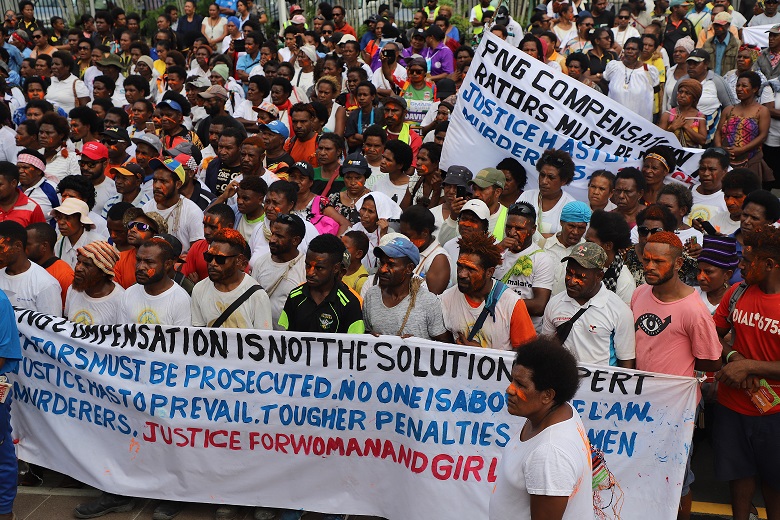
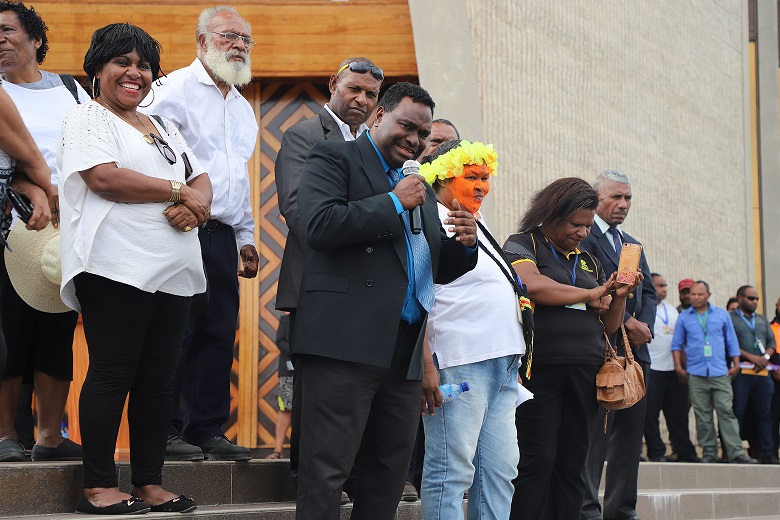
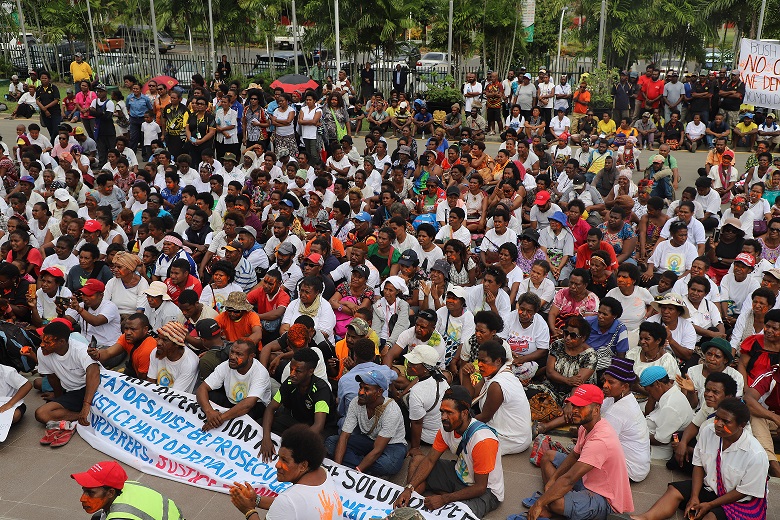
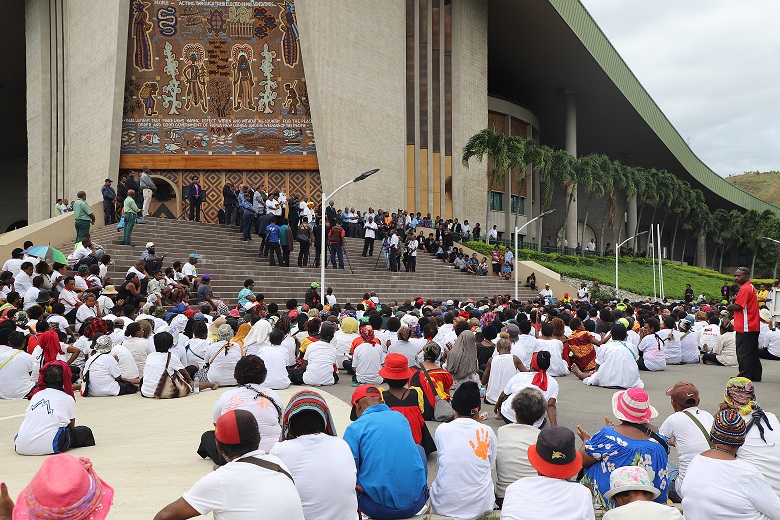
Human Right Defenders Association and National Capital District Commission Peaceful Demonstration

The theme for the recent peaceful demonstration was “No Compensation, we demand justice for our women and girls”.

The Papua New Guinea Constitution sets down fundamental rights of all people including:

  • The right to life;

  • The right to protection from the law; and

  • The right to freedom from inhuman treatment.

Hundreds of walkers joined together peacefully in support of these rights. They were met on the steps of parliament by Deputy Prime Minister, Steven Davis who affirmed that the government is serious about human rights, and men and women must be equal in rights.

Bel isi PNG partners joined the peaceful march as we are passionate about addressing and raising awareness on human rights issues including family sexual violence and the protection of the rights of women and girls.

National Capital District Commission Family Sexual Violence Action Committee Manager Ruth Beriso, who coordinated the involvement of Bel isi PNG partners, stood on the steps of parliament alongside the Human Rights Defenders Association on behalf of all women and girls.

Peiru
Thai cave rescue divers praise PNG at Bel isi PNG leadership forum

Two genuine Aussie heroes have thrown their weight behind Bel Isi PNG, Port Moresby’s ground-breaking public-private partnership, to tackle family and sexual violence (FSV).

Named the 2019 Australians of the Year following their role in rescuing 12 Thai boys and their soccer coach from a flooded cave in 2018, Dr Richard Harris and Dr Craig Challen took part in Bel Isi PNG’s second annual Leadership Forum held recently at the iconic APEC Haus.

In town thanks to Oil Search – an enthusiastic supporter of Bel is PNG– they were joined by many prominent figures from government, business, and civil society.

All guests heard National Capital District (NCD) Governor Powes Parkop congratulate partners on a hugely successful first year which saw the establishment of a safe house funded by BSP and a case management centre supported by Steamships. Oil Search Foundation provides all project management, and the Australian Government (in partnership with the Government of Papua New Guinea through its Pacific Women Shaping Pacific Development Program) provides core funding support. The local NGO, Femili PNG operates core services.

Bel isi PNG has already assisted over 200 FSV survivors, including children, to access services and has provided around 2000 people with information on where to find help through employee awareness sessions. The Governor said that while progress is very promising, challenges are daunting:

“Yes we have reduced FSV but ultimately we need to stop it,” he said. “We need to think about how we can change mindsets and behaviour, and in doing so, we need to think outside the box.”

The Governor’s words set the tone for the forum that followed – an interactive set of round-table discussions where participants shared ideas on how to protect and empower women. They put forward action plans on engaging men in preventing and addressing violence, leading change, overcoming the many constraints faced at work including every day sexism, developing corporate policies and advocating for change.

Oil Search Foundation’s Executive Director, Stephanie Copus-Campbell, described the discussions as extremely productive.

“It’s events like these that galvanize the private sector in partnership with government and civil society to drive change. As leaders and influencers within the community, we have a responsibility to raise awareness of the challenges and come up with practical solutions to address the problems.”

‘With the majority of women in Papua New Guinea having suffered from some form of physical or sexual violence, changing mindsets is a major priority – and we’re not going to do that without working in partnership,” Copus-Campbell said.

Partners established the leadership forum to bring together leading voices and perspectives on the many facets of FSV. These voices included Police Minister Bryan Kramer, who emphasised the need for effective, sensitive and well-trained police; ANZ Chair Winifred Kamit, who promoted the need for effective leadership as well as developing the capacity of local NGOs to respond; Minister-Counsellor & Consul-General for Australia, Jo Stevens, who expressed the need to prioritise working with local service providers which have family and sexual violence policies and procedures in place; and CEO of the Brian Bell Group, Cameron Mackellar, along with Bank of South Pacific’s Head of Support Services, Alicia Sahib, who both demonstrated how active leadership results in more employees seeking support and in return able to perform better at work.

Participants also heard from male champions of change including NCD Deputy Governor and Motu Koita Assembly Chairman Dadi Toka Jr, Digicel CEO Colin Stone and Ganjiki Wayne representing the Oil Search Board on the positive role men can play in combatting FSV. The group agreed there are many PNG men who are actively driving positive change and inspiring other men and boys on why respect for women is good for everyone.

The two Australians of the Year, also male champions for change, congratulated the countless every day heroes who devote their lives to a safer PNG. Both highlighted the essential role of leadership and partnership in addressing the challenges and maximising the opportunities for change.

Peiru
National Capital District support for Family Sexual Violence services
IMG_0909.jpg

While family and sexual violence is still a massive problem in Port Moresby, we now have more support services. Survivors have more options of the type of service they need, such as seeking medical help from a doctor, a court protection order from a legal officer, counselling and safe accommodation.

What the survivors of violence now need is a map of these different services, to smoothly connect them. A survivor cannot always be expected to navigate their way through the complex maze of FSV services– or, for that matter, even know they exist.

The National Capital District Gender Based Violence / Family and Sexual Violence Action Committee Secretariat coordinates referrals with the different services available in the city for survivors of family and sexual violence . Run by the National Capital District Commission, under the strong leadership of Governor Powes Parkop, this body provides a step by step road map of Port Moresby’s different FSV service providers – such as the Royal PNG Constabulary- Family Sexual Violence Units, State Child protection officers, the Family Support Centre, the Public Prosecutor’s Office, the Public Solicitors Office, safe houses and case management services.

Thanks to NCDC and partners, those who have experienced violence will know where to lodge a formal complaint, apply for a court order, access appropriate and timely medical support and sort counselling. Through organisations like Bel isi PNG survivors will also have access to case management and safe accommodation.

We commend the NCDC on being champions for change and helping survivors to seek the help they need.

Peiru
A Human Resource reflection


Recognising the need to adopt a formal Family and Sexual Violence (FSV) framework, Pansy Taueni-Sialis, HR Manager for Oil Search Ltd further details how Bel Isi has assisted Oil Search in supporting employees who are FSV survivors of FSV.

What was the driving motivation for Oil Search Foundation (OSF) and Oil Search Limited (OSL) to become a subscriber of Bel isi PNG?

Family and sexual violence (FSV) is a very serious issue that Oil Search recognised and wanted to address. For us, it was about wanting to make a difference. Not only within the workplace but within the community at large.

How has Bel Isi PNG been able to assist the employees of Oil Search?

Prior to being a subscriber to the Bel Isi PNG program our approach to assisting survivors of FSV was a little haphazard. We certainly had a framework in place, but it was not as simple and integrated as the Bel isi PNG framework. Since becoming a subscriber, Bel Isi PNG has enabled us to effectively assist our staff members straight away by providing a one stop solution to an integrated network of legal, case management, health and infrastructure including a safe house.

How has Bel Isi PNG been able to assist you as HR Manager of Oil Search?

Bel Isi PNG’s logo is underpinned by the motto “Better lives. Better business.” Oil Search wanted to be part of an initiative which supported this mandate; recognizing the two go hand in hand.

People understand the damages FSV can have to people’s lives but many, including Oil Search, were surprised to receive the data concerning the affects and damages FSV can have on business. Indeed, FSV can have drastic impacts on a company’s bottom line with absenteeism, reduction of productivity and work safety accidents.

Since becoming a subscriber, we have seen first-hand the difference this initiative has had on our employee’s lives. One of the most reassuring aspects is seeing the employee still at work, which provides that security and economic empowerment to the individual and puts them in a position whereby they do not have to rely financially on others.

To change behaviours, one must break the ‘cycle’. How does this apply to Oil Search and being a subscriber of Bel Isi PNG?

In situations of FSV, return to work and employee retention is at risk. We have seen in the media the worst cases where people lost their lives because of violence at home. This is unacceptable and we knew as an organisation we had to do something to help our employees and to help break the cycle.

Not being able to access the right services and resources continues to contribute to the problem. For us, subscribing to Bel Isi PNG was about providing options to staff to help support them to break this cycle.

What are the misconceptions surrounding FSV?

There is a natural bias which assumes woman from low socio-economic backgrounds are the ones predominately experiencing FSV. This is an incorrect assumption. FSV affects all levels of society and also all genders. Indeed, females experience a higher incidence of it occurring, however males too are subjected and thus both genders need the support systems in place.

Does Bel isi PNG fit into the policy framework of Oil Search in terms of dealing with FSV or DV?

OSL does not tolerate any form of violence. This is why we are a driving force behind supporting those who have been exposed to violence as well as providing the tools for prevention.

We are in the process of operationalizing a policy which will more formally address these tools for prevention plus provide survivors with access to resources to further assist them. For example, transport reimbursements for those who need to access support services such as the police station, hospitals etc and who may not have the available funds to do so. Furthermore, and most importantly, the policy includes access to leave for FSV situations.

How would you encourage other organizations to act/respond?

For organizations who are still on the fence on whether they should be a subscriber, we’ve seen it work first hand.

Peiru
G4S Meri Seif Line - committed to sensitively assist survivors
 
IMG-9716.jpg
 

G4S continues to provide an essential emergency transport service for families experiencing family and sexual violence as championed by Managing Director, Mr Kerry McNamara. All Meri Seif Line operators and responders are trained in responding sensitively to survivors via a training package developed by the Business Coalition for Women (BCFW). The following interview with Evonne Kennedy outlines the services offered by the Meri Seif Line and the training provided to G4S staff.

What is the G4S Meri Seif Line?

The Meri Seif Line can be contacted on 7222-1234, 24 hours a day, 7 days a week – please save this number.

The G4S Meri Seif Line is a hotline and service that has been operating in Port Moresby and is also now included as part of Bel isi PNG’s coordinated and structured referral pathways - providing a safe transport option for survivors of Family & Sexual Violence (FSV). Available 24 hours a day, 7 days a week, an FSV survivor can call the hotline and request a pick up by a G4S response team who will then safely remove the survivor and take them to a ‘safe’ place. This can be a friend or family member’s home, the hospital, the police station, a safe house etc. The location is at the survivor’s discretion.

Specialised training for first responders of the Meri Seif Line?

Recognising that G4S Meri Seif Line responders are the first point of contacts with survivors in rendering assistance to the survivor, collectively the Bel isi PNG partners acknowledged the importance of training and skilling the G4S staff as first line responders. As a key partner of Bel isi PNG and having already had previous experience in developing training and modules around access to justice for survivors of FSV, BCFW was able to take the lead in developing and implementing the Train the Trainer (TOT) Manual.

What does the TOT involve?

Initially there was not a clear process in terms of how the G4S team should respond to and sensitively assist survivors. BCFW worked with the G4S Human Resources department and head trainer to develop the TOT Manual. Care was taken to ensure the training complemented G4S code of conduct and company policies.

The training is concentrated around educating the G4S responders on FSV, the laws and the appropriate response. The training has been framed in the context of human rights and works towards ‘unpacking’ the power and social norms around violence. The training also covers the referral pathways depending on the time of day or night the call is received, plus the importance of timely medical attention if there has been an incident of sexual assault.

Whilst BCFW is responsible for the development and initial implementation of the manual, to ensure its sustainability the training will be managed by G4S with BCFW co-facilitating components in the future.

What is meant by ‘unpacking’ the power?

PNG has a deeply ingrained culture of violence. One of our biggest issues is the level of acceptability towards violence which is a lot higher here than other countries which have instilled more sensitisation around eradicating violence from social norms.

With this in mind, our challenge is about ‘unpacking power’ and looking more closely at all types and levels of violence in an effort to gradually work towards severing the cycle.

Why was a train the Trainer model selected?

We need to approach the sustainability of the training from both a company and employee level. From a company level, it is critical that the training is embedded into the company policy and induction processes to encourage and facilitate a continuation of practice.

From an employee level it must be reinforced that FSV is not just a family issue, it is against the law. This will be our biggest challenge as we first need to break through some of the myths which surround FSV. It’s about recognising this is a social issue and that beliefs and prejudices will not change overnight but with education and continual awareness there is hope. Various platforms, for example, lunch and learn and information sessions within the company will help to continually educate the employees on FSV.

Does BCFW have the capacity to develop training manuals for other companies?

Yes. We currently have other companies who have engaged us to provide services, resources and support regarding FSV. This is very comforting as it shows the commitment the private and public sector have to combatting this issue.

For more information on the training services provided please visit their website http://www.pngbcfw.org/.

Meri Seif Line

The Meri Seif Line can be contacted on 7222-1234, 24 hours a day, 7 days a week.

Peiru